restaurant

History

Visitation Sainte Marie

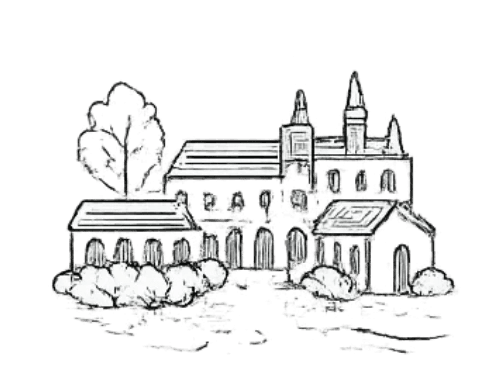
Long before the elegant streets of Saint-Germain-des-Prés took their present form, the land where these apartments stand belonged to a vast religious estate. In the 17th century, the area was home to the Convent of the Visitation Sainte-Marie, founded by the Visitandine order, a community of nuns inspired by the teachings of Saint Francis de Sales and Jeanne de Chantal.


The convent was established in 1657 when Geneviève Derval-Pourtel, widow of the Count of Enfréville, financed the creation of a second Parisian house of the Visitation. At that time the Faubourg Saint-Germain was still developing, and many religious institutions were settling in the neighborhood, surrounded by gardens and open land.


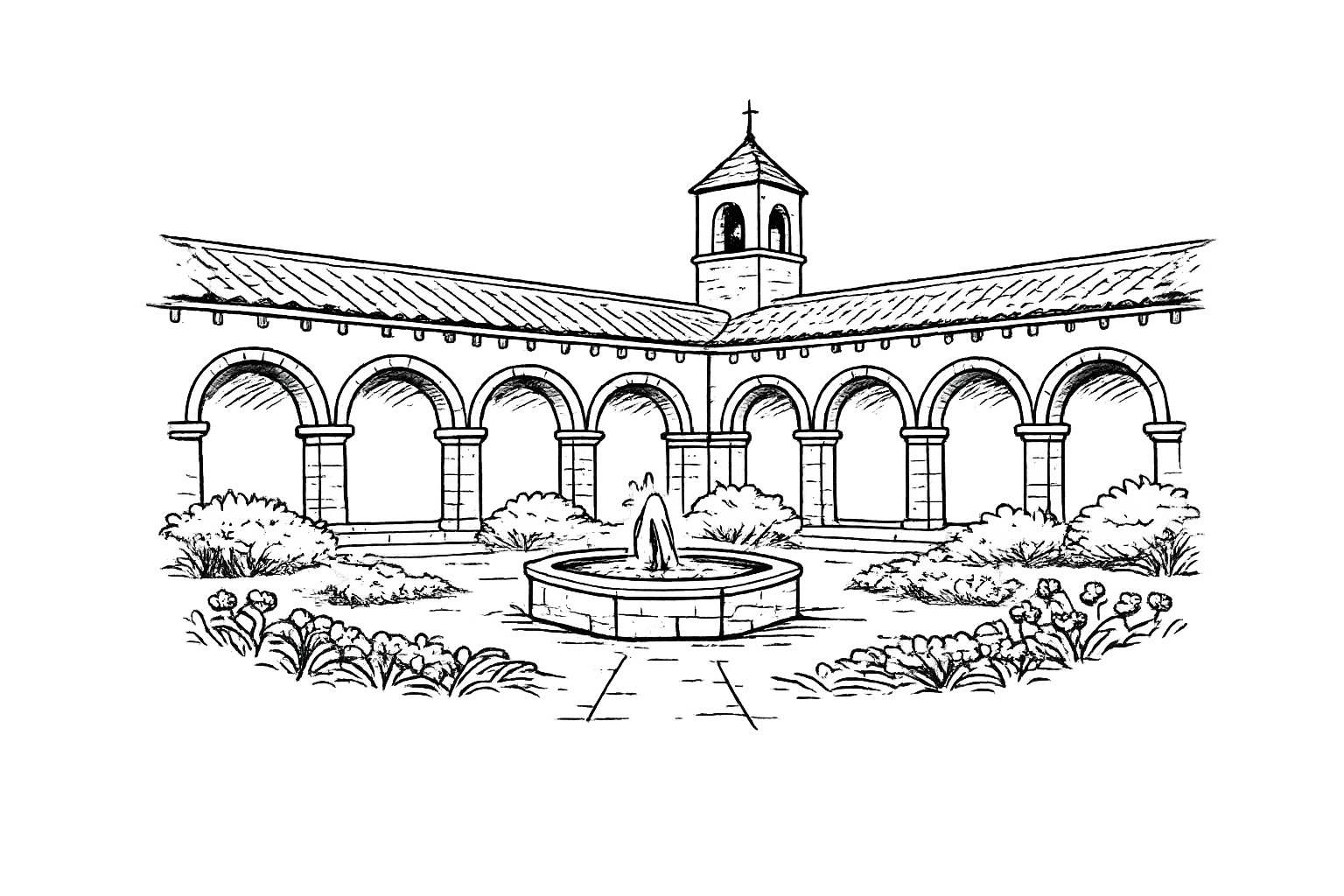
The convent occupied a large domain stretching along the Rue du Bac, with cloisters, buildings, and extensive gardens reaching toward what are now Rue de Grenelle and Rue Saint-Simon. For more than a century, it formed an important spiritual and architectural presence in the area.


In 1775, the convent chapel was rebuilt under the direction of the architect Pierre-Louis Hélin. During the reconstruction, Queen Marie-Antoinette personally laid the first stone of the chapel on October 30, 1775.


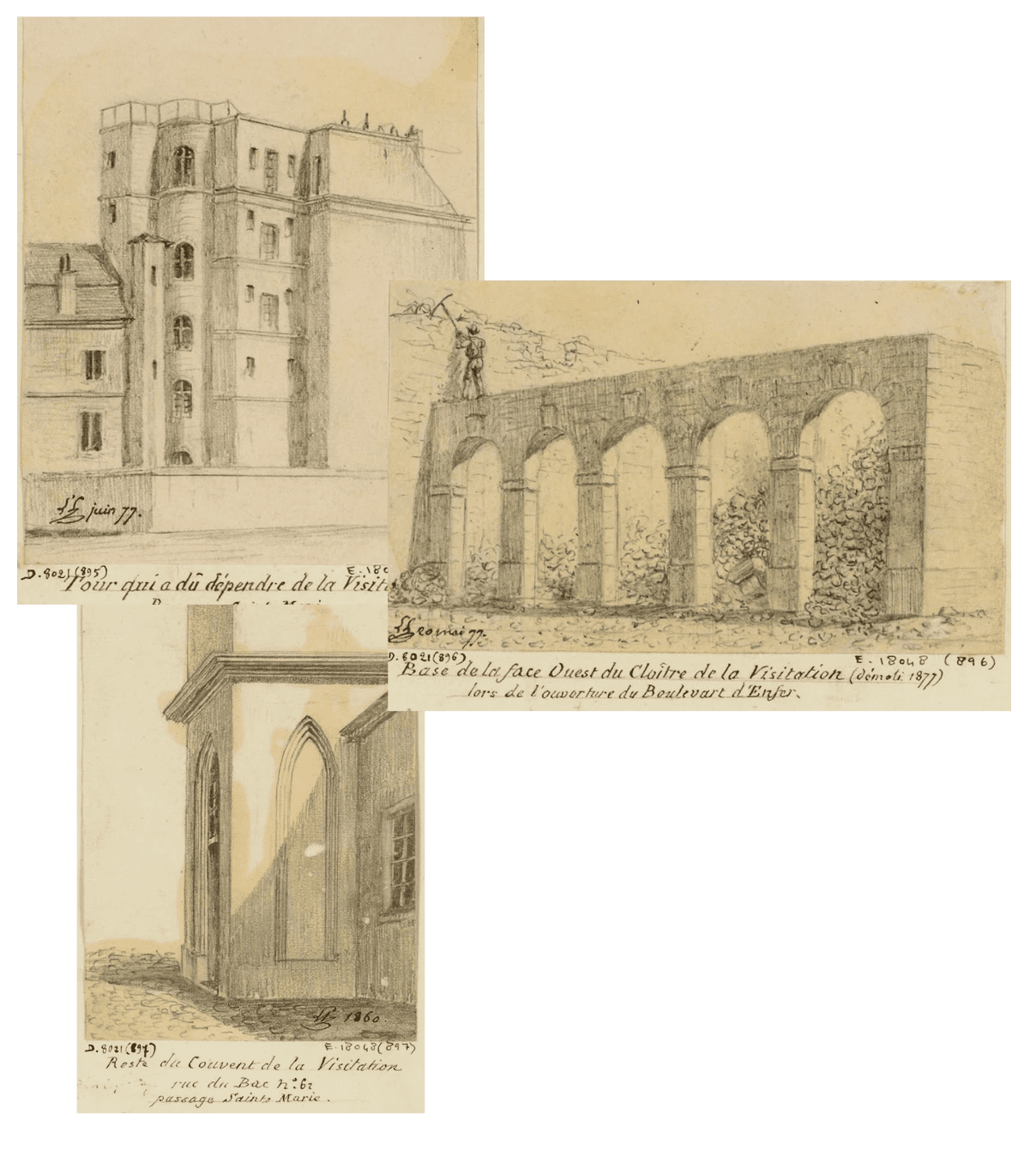
The convent’s history came to an abrupt end during the French Revolution. In 1790 the religious orders were suppressed and the convent was closed. In 1796 the buildings and land were sold as national property, and much of the estate was gradually demolished and divided into smaller parcels.


New streets were later opened across the former grounds of the convent. The old Passage Sainte-Marie eventually became Rue Paul-Louis-Courier, while other parts of the estate gave rise to neighboring streets such as Rue Saint-Simon.


By the mid-19th century only fragments of the original convent remained, and these final traces disappeared as the neighborhood evolved into the elegant residential district we know today.


Today, the calm courtyards and historic streets surrounding the apartments still reflect the layered history of Saint-Germain-des-Prés, where centuries of Parisian life—from convent gardens to literary cafés—have shaped one of the city’s most iconic neighborhoods.
Historic Timeline

1610

In a small house in Annecy, François de Sales and Jeanne de Chantal found a new religious order for women: the Visitation.

1657

A wealthy Norman widow signs a contract to fund a Visitation convent in Paris, setting the whole project in motion

1673

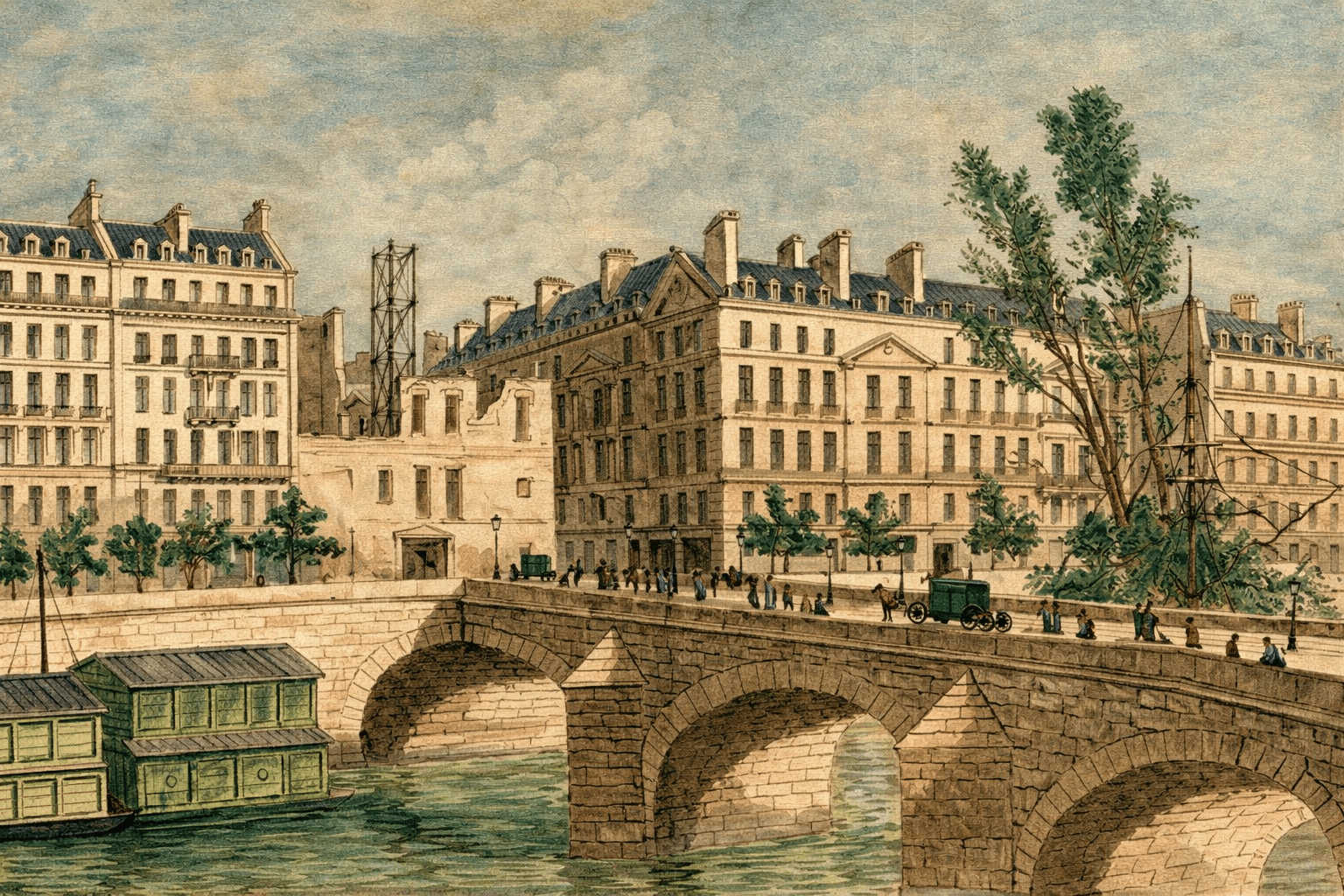
The nuns cross the Seine and settle on rue du Bac, claiming a large plot with gardens where your street now runs.

1674

The royal architect Charles Chamois breaks ground on a full monastic complex — cloisters, chapel, gardens — on this very block.

1775

The nineteen-year-old Queen Marie-Antoinette arrives on rue du Bac and lays the first stone of the new chapel with her own hands.

1790

The Revolution dissolves all religious orders overnight, and the nuns are forced to abandon the convent they had called home for over a century.

1879

The street carved through the former monastery grounds is officially named rue Paul-Louis-Courier — the name it still carries today.

HotelBeach

Les Suites du Couvent

Email

booking@pickaflat.com

Address

43 Rue d'Aboukir, 75002 Paris, France

Les Suites du Couvent appartements are managed by the Pickaflat agency, for any requests or specific question, please refer to Pickaflat.

Visitation Sainte Marie

Long before the elegant streets of Saint-Germain-des-Prés took their present form, the land where these apartments stand belonged to a vast religious estate. In the 17th century, the area was home to the Convent of the Visitation Sainte-Marie, founded by the Visitandine order, a community of nuns inspired by the teachings of Saint Francis de Sales and Jeanne de Chantal.


The convent was established in 1657 when Geneviève Derval-Pourtel, widow of the Count of Enfréville, financed the creation of a second Parisian house of the Visitation. At that time the Faubourg Saint-Germain was still developing, and many religious institutions were settling in the neighborhood, surrounded by gardens and open land.


The convent occupied a large domain stretching along the Rue du Bac, with cloisters, buildings, and extensive gardens reaching toward what are now Rue de Grenelle and Rue Saint-Simon. For more than a century, it formed an important spiritual and architectural presence in the area.


In 1775, the convent chapel was rebuilt under the direction of the architect Pierre-Louis Hélin. During the reconstruction, Queen Marie-Antoinette personally laid the first stone of the chapel on October 30, 1775.


The convent’s history came to an abrupt end during the French Revolution. In 1790 the religious orders were suppressed and the convent was closed. In 1796 the buildings and land were sold as national property, and much of the estate was gradually demolished and divided into smaller parcels.


New streets were later opened across the former grounds of the convent. The old Passage Sainte-Marie eventually became Rue Paul-Louis-Courier, while other parts of the estate gave rise to neighboring streets such as Rue Saint-Simon.


By the mid-19th century only fragments of the original convent remained, and these final traces disappeared as the neighborhood evolved into the elegant residential district we know today.


Today, the calm courtyards and historic streets surrounding the apartments still reflect the layered history of Saint-Germain-des-Prés, where centuries of Parisian life—from convent gardens to literary cafés—have shaped one of the city’s most iconic neighborhoods.